01
The Idea
Every piece begins with a point of view. Architecture, art, travel, nature, vintage references, modern femininity — any of these can become the beginning of a silhouette. Rather than designing around passing trends, we explore forms that have a distinctive identity of their own. The first sketches establish the garment's mood, proportions, attitude, movement and the way it should make the wearer feel. An idea becomes a line. A line becomes a silhouette.
02
Silhouette Development
Where structure meets movement. We study how a garment frames the shoulders, defines the waist, follows the body or deliberately moves away from it. Every proportion is developed to create balance from every angle — sculpted bodices, defined waists, architectural shoulders, fluid draping, structured tailoring, corset-inspired construction, asymmetric lines, voluminous skirts, controlled ruching and precisely placed cut-outs. Our aim is never simply to decorate the body; it is to design the form around it.
03
Fabric Selection
The fabric determines how the idea comes alive. A silhouette can only exist as beautifully as the material allows it to. Each fabric is selected for more than colour or appearance — we consider its weight, texture, stretch, fall, sheen, structure, transparency and movement. Brocades, satins, suiting fabrics, jacquards, knits, crochet, mesh, lycra, textured weaves and fluid drapes. Some fabrics are chosen to move. Others are chosen to hold their ground.
04
Colour & Surface
Colour is treated as part of the construction. We study how colour interacts with texture, form and light. Deep tones can intensify structure. Soft neutrals can reveal construction. Rich jewel shades create presence, while muted hues allow sculptural details to become the focal point. Surface treatments are approached with the same restraint — dimensional florals, brocade, texture, pleating, ruching or subtle embellishment, introduced only when they strengthen the garment. Nothing is added simply to fill space.
05
Pattern Making
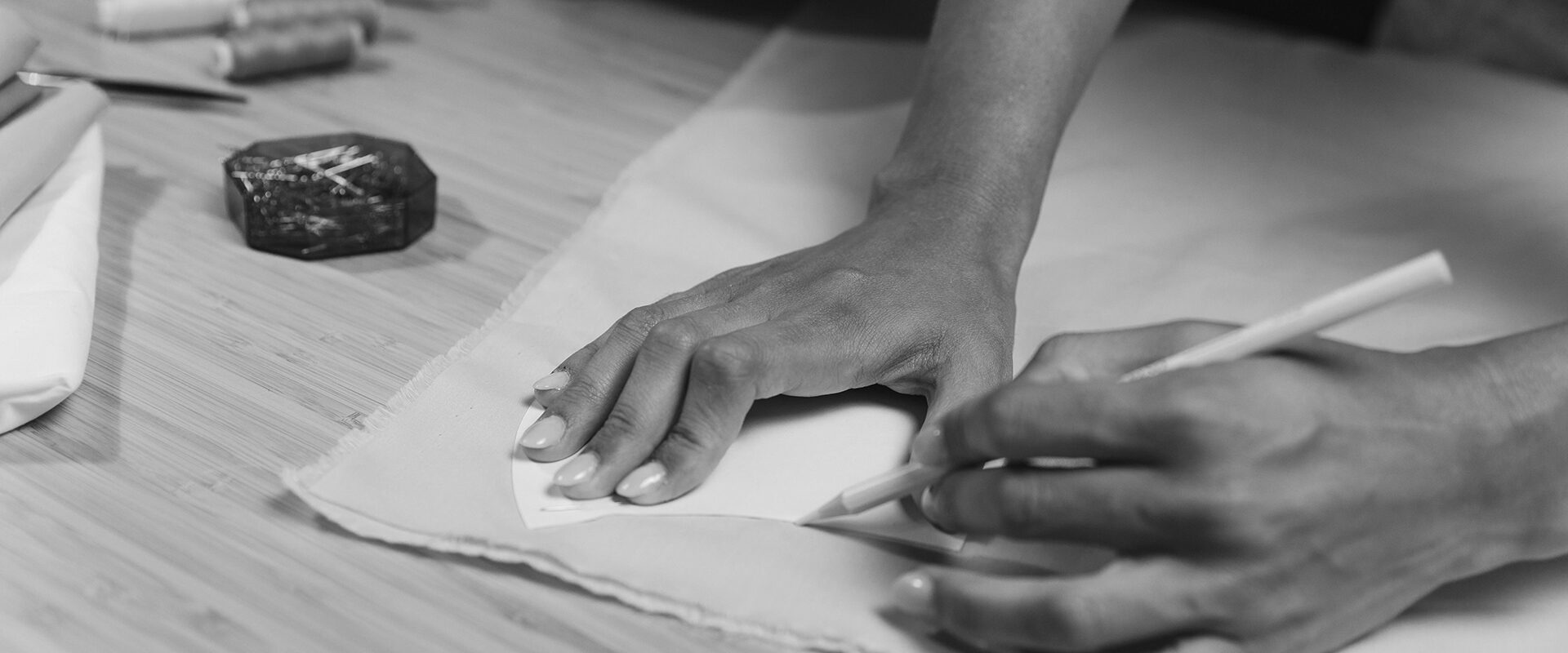
Turning a sketch into architecture. A drawing establishes the idea; the pattern determines whether that idea can exist. Our patterns translate the designer's proportions into precise garment components, accounting for the body's curves, balance, ease and movement. Lines are reconsidered in three dimensions. Seams are positioned. Volume is controlled. Necklines are refined. Waist placement is evaluated. This stage is where creative instinct meets technical discipline.
06
The First Prototype
The design meets the body. The first sample is where imagination becomes tangible. Each prototype is assessed for fit, balance, structure, proportion, movement, comfort and finish. We observe how the garment behaves rather than simply how it looks while standing still. Does the shoulder sit correctly? Does the fabric fall naturally? Does the waist remain defined when the wearer moves? Does the hem maintain its intended line? The answers guide the next round of refinement.
07
Draping & Sculpting
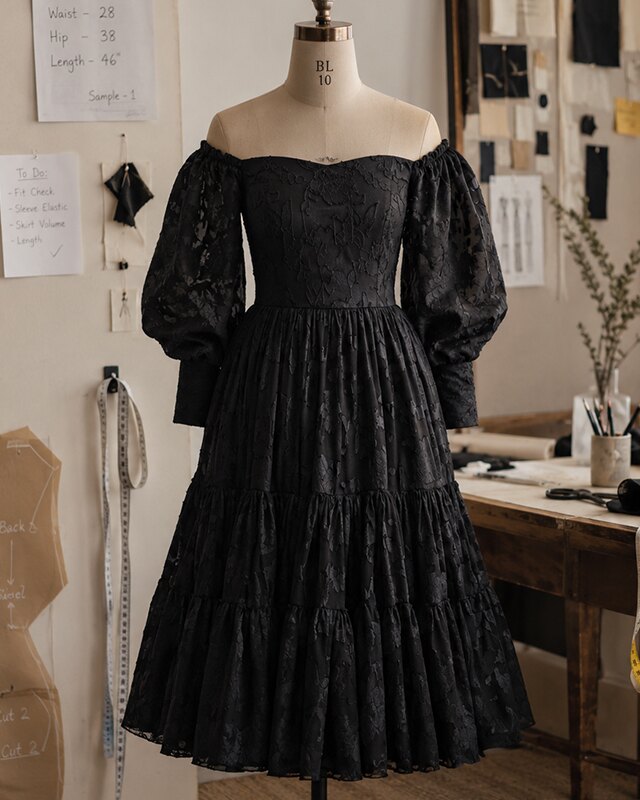
Some forms cannot be designed on paper alone. For garments with complex volume, sculpted bodices, dramatic folds or fluid asymmetry, development continues directly on the dress form. Fabric is pinned, folded, shaped and repositioned until the proportions feel instinctive. This allows us to understand the material in its most honest state — how it responds to gravity, tension and movement. A fold may move by a few centimetres. A curve may become sharper. A line may become quieter. Small decisions create the final character of the garment.
08
Fit & Refinement
Precision lives in the adjustments. Every design goes through a process of fitting and refinement before it reaches its final form. Measurements are reviewed across sizes while maintaining the visual intention of the original silhouette. We pay particular attention to shoulder placement, bust shaping, waist definition, hip balance, sleeve proportion, trouser fall, skirt movement, garment length, neckline position, ease and comfort. Our objective is not simply to enlarge or reduce a pattern — it is to preserve the design language of the garment across every size.
09
Construction
The unseen details matter too. Once the silhouette has been perfected, construction begins. Seams, panels, closures, linings, internal support and finishing are selected according to the needs of each individual design. Structured garments may require carefully engineered internal construction. Fluid pieces depend on clean seams and controlled handling. Tailored garments demand accuracy in alignment and proportion. Many of the decisions that give a garment its polish are never immediately visible. That is precisely why they matter.
10
The Details
Craft is often found in what you notice second. A beautifully placed button. The edge of a lapel. The direction of a pleat. A carefully finished hem. A dimensional floral element. A concealed closure. The transition between two textures. These details may appear quiet individually, but together they determine how considered the garment feels. At Adorn Aura, detail is not decoration. It is part of the design.
11
Movement Test
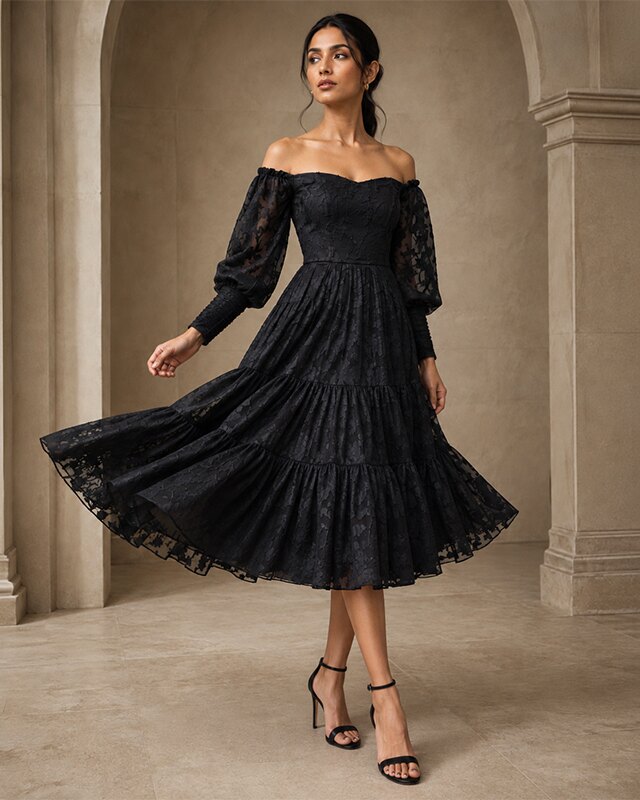
A garment must live beyond the fitting room. Before a design is complete, we look at it in motion — walking, sitting, turning, standing. We observe how fabric responds, whether structured elements retain their shape and whether proportions remain balanced from different viewpoints. Because a garment is never experienced as a still image. Its true character appears when it moves with the woman wearing it.
12
The Final Edit
Knowing what to remove is also part of designing. The final stage is one of restraint. Every element is reconsidered. Does the silhouette need anything more? Is a detail competing with the construction? Could a line be cleaner? Could the garment say more by doing less? Only when the proportions, material and details feel resolved does the piece become part of the Adorn Aura collection.