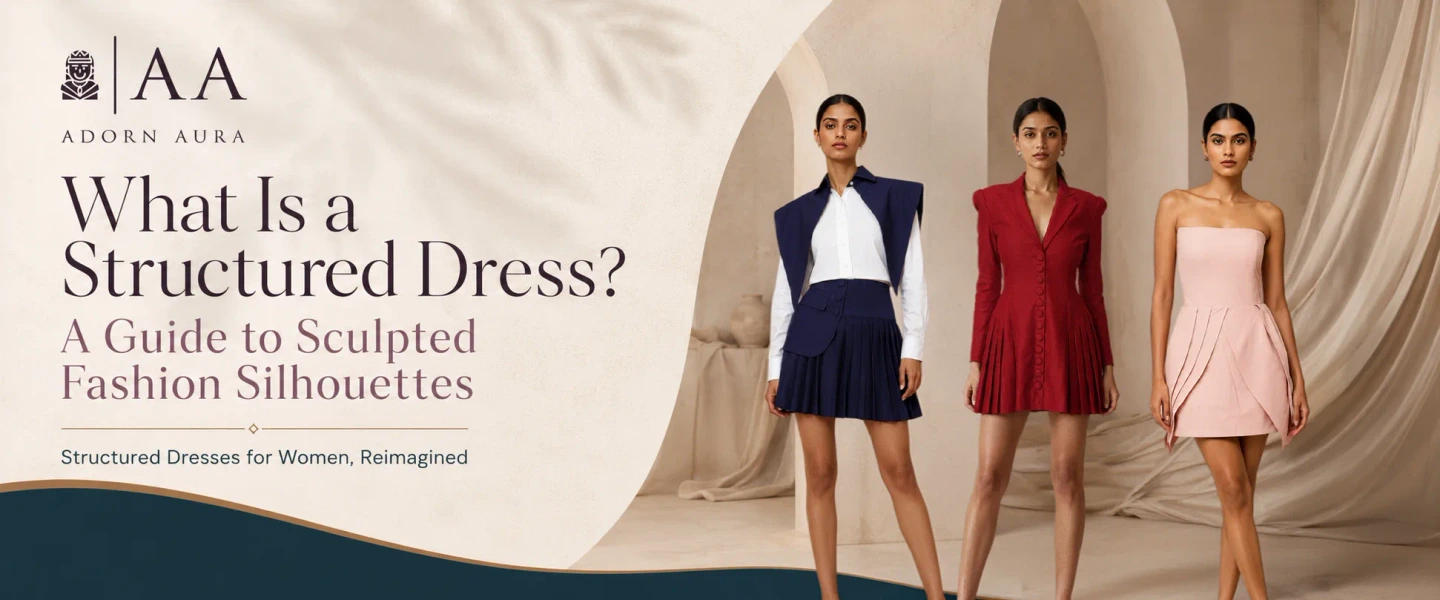
What Is a Structured Dress?
A structured dress is a garment designed to maintain a deliberate shape rather than simply following the natural drape of the body.
Unlike fluid dresses that rely on movement and softness, structured styles use construction techniques to create definition.
This may include:
- Boning
- Corsetry
- Internal lining
- Tailored seams
- Darting
- Pleating
- Shoulder structure
- Panels
- Reinforced bodices
- Stiffer or heavier fabrics
- Sculptural draping
The purpose is not necessarily to make a dress rigid.
Instead, structure gives designers greater control over the silhouette, allowing them to shape the waist, define the shoulders, build volume, create curves, or introduce architectural elements.
That is why structured dresses for women often feel more intentional and visually distinctive than simpler, softer silhouettes.
Why Are Structured Dresses So Popular?
Fashion has increasingly moved toward garments that make an impact through shape rather than excessive decoration.
A beautifully constructed dress can feel striking even when it is completely monochrome.
Instead of relying on sequins, heavy embellishment, or bold prints, structure creates interest through:
- Proportion
- Form
- Construction
- Movement
- Negative space
- Defined lines
- Unexpected volume
This makes sculpted dresses particularly appealing for women who prefer sophisticated statement dressing.
A strong shoulder, carefully constructed bodice, dramatic hip shape, or architectural skirt can transform a relatively simple fabric into something memorable.
What Makes a Dress Structured?
Several design elements can contribute to a structured silhouette.
1. Corsetry and Boning
Corsetry is one of the most recognisable forms of garment structure.
Traditional corsets were designed primarily to reshape the torso, but modern corset dresses often use corset-inspired construction more subtly.
Boning may be built into the bodice to:
- Support the bust
- Define the waist
- Keep the neckline in place
- Maintain the garment's shape
- Create a smooth, sculpted finish
Modern corset dresses can range from romantic gowns to sharp mini dresses and contemporary occasionwear.
The effect depends entirely on the fabric, neckline, proportion, and styling.
2. Tailored Seams
Tailoring is not limited to blazers and suits.
Many tailored dresses use strategic seams to shape the garment around the body.
Princess seams, darts, curved panels, and defined waist seams can all help create a controlled silhouette without requiring heavy internal construction.
These details are especially effective in:
- Midi dresses
- Blazer dresses
- Pencil dresses
- Structured gowns
- Fitted mini dresses
Tailoring can make a garment appear clean and effortless, even when considerable technical work has gone into creating the shape.
3. Defined Shoulders
Shoulder structure can dramatically change the character of a dress.
A defined shoulder may be created through:
- Shoulder pads
- Extended seams
- Sculptural sleeves
- Sharp tailoring
- Folded fabric
- Architectural pleating
Strong shoulders can create a powerful, balanced silhouette, particularly when paired with a fitted waist.
This type of shape is often seen in contemporary architectural fashion, where proportion is treated as an important design feature.
4. Sculpted Bodices
A sculpted bodice is designed to hold its shape around the upper body.
It may feature:
- Moulded cups
- Boning
- Corsetry
- Internal support
- Draped panels
- Folded fabric
- Asymmetric construction
Sculpted bodices are particularly common in occasionwear because they create a strong focal point while maintaining a refined appearance.
They can also reduce the need for excessive accessories because the construction itself becomes the statement.
5. Controlled Volume
Structure does not always mean fitted.
Some of the most interesting sculpted dresses use volume.
Think:
- Balloon skirts
- Dramatic peplums
- Oversized sleeves
- Structured ruffles
- Pleated panels
- Sculptural trains
- Exaggerated hips
- Folded fabric details
The difference between random volume and sophisticated structure is control.
Well-designed volume should feel intentional, balanced, and integrated into the silhouette.
Structured Dresses vs Flowing Dresses
Both styles can be elegant, but they create very different effects.
| Structured Dresses | Flowing Dresses |
|---|---|
| Hold a defined shape | Move freely with the body |
| Often use tailoring or internal support | Usually rely on drape |
| Create stronger visual lines | Create softer visual movement |
| Can feel architectural | Often feel romantic or relaxed |
| Emphasise proportion | Emphasise fluidity |
| Common in sculpted occasionwear | Common in soft gowns and resortwear |
Neither approach is inherently better.
The choice depends on the occasion, your personal style, and the kind of presence you want your outfit to create.
What Are Sculpted Dresses?
Sculpted dresses are garments designed almost like three-dimensional forms.
The designer is not simply covering the body with fabric. The fabric is shaped, folded, supported, or engineered to create a specific silhouette.
A sculpted dress might feature:
- A curved neckline
- A fitted corseted waist
- Three-dimensional floral elements
- Dramatic folds
- Structured ruffles
- Asymmetric volume
- A moulded bodice
- Architectural draping
The result can feel almost artistic, but good sculptural fashion should still remain wearable.
The most sophisticated pieces balance visual impact with movement and comfort.
What Is Architectural Fashion?
Architectural fashion refers to clothing that uses principles associated with architecture, such as proportion, geometry, structure, balance, and form.
Instead of treating fabric purely as something soft and fluid, designers manipulate it almost like a building material.
Common characteristics include:
- Strong geometric lines
- Asymmetry
- Sculptural silhouettes
- Strategic volume
- Layered panels
- Defined shoulders
- Structured folds
- Unexpected cut-outs
- Controlled negative space
Architectural fashion does not necessarily need to look futuristic.
A beautifully tailored blazer dress, a sculpted corset gown, or an asymmetric pleated dress can all reflect architectural thinking.
Different Types of Structured Dresses for Women
Structured Mini Dresses
Mini dresses become particularly impactful when paired with strong construction.
Popular details include:
- Blazer-inspired shoulders
- Corseted bodices
- Sculptural sleeves
- Asymmetric hems
- Defined waists
- Statement buttons
A structured mini works particularly well for cocktail parties, birthdays, dinners, and fashion-forward evening events.
Structured Midi Dresses
Midi silhouettes offer a balance between drama and versatility.
They can work for:
- Engagement parties
- Formal lunches
- Corporate events
- Dinner occasions
- Wedding celebrations
A fitted waist combined with a sculptural neckline or controlled skirt volume can create a sophisticated silhouette without feeling overly formal.
Structured Gowns
For formal occasions, structured gowns create significant visual presence.
Look for:
- Sculpted bodices
- Defined waistlines
- Architectural skirts
- Dramatic trains
- Corsetry
- Controlled ruffles
- Strong shoulder details
Because the silhouette itself carries so much visual interest, these gowns often work best with minimal accessories.
Blazer Dresses
Blazer dresses are among the most accessible forms of tailored dresses.
They combine traditional suiting details with the proportions of a dress.
Common features include:
- Lapels
- Defined shoulders
- Double-breasted fronts
- Structured waists
- Long sleeves
- Asymmetric closures
They are ideal for women who prefer sharp, contemporary dressing.
Corset Dresses
Modern corset dresses can range from romantic to minimal.
A corseted bodice helps create definition through the torso while supporting more dramatic design elements elsewhere in the garment.
They work especially well for:
- Formal evenings
- Cocktail events
- Weddings
- Birthdays
- Receptions
The strongest designs use corsetry as part of the overall silhouette rather than simply as decoration.
What Fabrics Work Best for Structured Dresses?
Fabric plays an important role in determining how much shape a dress can hold.
Brocade
Brocade has natural body and visual richness, making it ideal for sculpted gowns and statement dresses.
Its woven texture can add depth without requiring additional embellishment.
Jacquard
Jacquard fabrics work well for structured silhouettes because they often have enough weight to maintain shape.
They are particularly effective for:
- Corset dresses
- Fitted gowns
- Sculptural mini dresses
- Tailored occasionwear
Suiting Fabrics
Suiting materials are ideal for blazer dresses and sharply tailored silhouettes.
They can hold:
- Shoulder structure
- Pleats
- Defined seams
- Straight lines
They are often used when the design needs a clean, polished finish.
Satin
Satin is usually associated with fluidity, but heavier satin can also be manipulated into sculptural shapes.
It works particularly well when designers want a combination of:
- Structure
- Sheen
- Draping
- Movement
Taffeta and Similar Crisp Fabrics
Crisper fabrics are ideal for volume.
They can be used to create:
- Full skirts
- Dramatic sleeves
- Sculptural folds
- Oversized bows
- Statement ruffles
Because these fabrics hold shape, they are frequently used in more dramatic architectural fashion.
How Should a Structured Dress Fit?
Fit is especially important with structured garments.
Because the dress is designed to maintain a particular shape, an incorrect size can affect both comfort and appearance.
Check the Bust
Corseted or sculpted bodices need to sit correctly across the bust.
Too tight, and the fabric may distort.
Too loose, and the intended structure may collapse or shift.
Check the Waist
If the garment has a defined waist, make sure it sits at the intended point on your body.
A small shift in waist placement can alter the proportion of the entire silhouette.
Check the Shoulders
With tailored dresses, shoulder placement matters.
The shoulder seam should usually sit where the design intends unless the garment deliberately uses exaggerated or dropped shoulders.
Check Movement
A structured dress should still allow you to:
- Sit comfortably
- Walk naturally
- Raise your arms
- Turn your torso
- Move without constant adjustment
Structure should support the silhouette, not restrict the experience of wearing it.
How to Style Structured Dresses
Structured dresses already have strong visual character, so styling should usually be deliberate and restrained.
Choose Minimal Jewellery
If the neckline or shoulders are sculptural, you may only need earrings.
Consider:
- Sculptural studs
- Elegant drop earrings
- A single cuff
- A refined ring
Avoid covering interesting construction with too many accessories.
Choose Sleek Footwear
Structured outfits work particularly well with footwear that has clean lines.
Try:
- Pointed pumps
- Strappy heels
- Slingbacks
- Sculptural heels
- Minimal stilettos
The shoe should complement the silhouette rather than visually interrupt it.
Keep the Handbag Compact
For evening events, choose:
- A structured clutch
- Mini top-handle bag
- Sleek shoulder bag
- Minimal metallic clutch
A small bag usually balances sculptural dresses better than an oversized one.
Structured Dresses for Different Occasions
Cocktail Parties
A sculpted mini or midi dress works beautifully.
Consider:
- Strong shoulders
- Corsetry
- Architectural draping
- Structured ruffles
- Asymmetric details
Keep accessories sharp and minimal.
Weddings
For weddings, consider elegant structured gowns or midi dresses in refined fabrics.
Brocade, jacquard, satin, and sculptural draping can all create an elevated look.
For wedding guest dressing, avoid styling that feels overly bridal or excessively dramatic unless the dress code calls for it.
Formal Dinners
A clean, sculpted silhouette can make a strong impression without feeling overdone.
Deep colours such as wine, teal, black, navy, or plum work particularly well for evening occasions.
Birthdays
Birthday dressing offers more room to experiment.
Try:
- Sculptural mini dresses
- Corset dresses
- Statement sleeves
- Dramatic necklines
- Strong monochrome looks
If the dress already has significant design detail, keep jewellery simple.
How to Choose a Structured Dress for Your Personal Style
If You Prefer Minimalism
Look for clean tailoring and subtle structure.
Choose:
- Monochrome colours
- Simple necklines
- Defined waists
- Sharp seams
- Minimal embellishment
If You Love Feminine Fashion
Consider:
- Sculpted florals
- Corset bodices
- Off-shoulder silhouettes
- Soft curves
- Structured ruffles
These details can feel romantic without becoming overly decorative.
If You Prefer Power Dressing
Look for:
- Strong shoulders
- Blazer dresses
- Sharp lapels
- Tailored waists
- Longer sleeves
- Clean geometric lines
These silhouettes often communicate confidence through proportion rather than embellishment.
If You Love Statement Fashion
Explore stronger elements of architectural fashion, including:
- Asymmetry
- Exaggerated volume
- Sculptural folds
- Dramatic hips
- Oversized sleeves
- Unexpected cut-outs
Allow the garment to remain the focal point.
Why Structured Dresses Photograph So Well
Structured garments tend to photograph beautifully because the silhouette remains visible even from a distance.
Strong lines and defined proportions help the garment retain its character in:
- Full-length photographs
- Editorial shoots
- Event photography
- Video
- Social media content
A sculpted shoulder, fitted corset, or architectural skirt creates recognisable shape even before smaller details become visible.
This is one reason structured occasionwear is so effective for special events.
Common Structured Dress Styling Mistakes
Wearing the Wrong Size
Do not assume a structured garment will stretch in the same way as softer clothing.
Always check measurements carefully.
Over-Accessorising
A dress with complex construction often needs very little additional decoration.
Let the silhouette lead.
Choosing the Wrong Undergarments
Corsetry, open backs, sculpted necklines, and fitted bodices can require specific undergarments.
Check the garment construction before deciding what to wear underneath.
Ignoring Fabric Behaviour
Structured fabrics can react differently when sitting, walking, or travelling.
Try the full outfit before an event so you understand how the garment moves.
Fighting the Silhouette
If a dress is intentionally architectural, do not try to soften every element with excessive layering.
Allow the shape to remain visible.
Structured Dresses vs Corset Dresses: What Is the Difference?
A corset dress is one type of structured dress, but not every structured dress contains a corset.
Corset dresses specifically use corset-inspired construction, usually around the bodice or waist.
A structured dress can achieve shape through many other techniques, including:
- Tailoring
- Fabric choice
- Pleating
- Internal support
- Shoulder construction
- Panel work
- Sculptural draping
Think of structured fashion as the broader category, with corsetry as one method within it.
Are Structured Dresses Comfortable?
They can be.
Good construction should support the body while still allowing movement.
Comfort depends on several factors:
- Correct sizing
- Fabric weight
- Boning placement
- Lining
- Seam construction
- Garment length
- Degree of compression
A properly fitted structured dress should feel secure rather than restrictive.
If you cannot sit or breathe comfortably, the fit or construction is likely wrong for you.
Are Structured Dresses Timeless or Trend-Driven?
Certain sculptural details move in and out of fashion, but structure itself is timeless.
Tailoring, defined waists, corsetry, pleating, and controlled volume have appeared throughout fashion history in different forms.
What changes is how designers reinterpret them.
Modern structured dresses for women tend to feel cleaner, lighter, and more wearable than many historical versions, using structure to create presence without unnecessary heaviness.
That makes them particularly suited to contemporary occasionwear.
Frequently Asked Questions About Structured Dresses
What does structured mean in fashion?
Structured fashion refers to garments designed to maintain a deliberate shape through tailoring, internal construction, fabric choice, boning, seams, pleating, or other techniques.
Are structured dresses flattering?
They can be highly flattering when properly fitted because the garment is designed to control proportion and create definition. The most important factor is choosing the correct silhouette and size for your body and personal comfort.
What are sculpted dresses?
Sculpted dresses are garments shaped to create three-dimensional forms through techniques such as corsetry, draping, folding, structured ruffles, panel construction, and controlled volume.
Are corset dresses considered structured dresses?
Yes. Corset dresses are a form of structured dress because the corset construction helps support and shape the bodice.
What is the difference between tailored dresses and regular dresses?
Tailored dresses use precise seams, darts, panels, or suiting-inspired construction to achieve a cleaner and more defined fit. Regular dresses may rely more heavily on natural fabric drape.
What is architectural fashion?
Architectural fashion uses concepts such as geometry, proportion, volume, balance, and structure to create clothing with distinctive three-dimensional silhouettes.
What occasions are structured dresses suitable for?
They can work for cocktail parties, weddings, formal dinners, birthdays, receptions, corporate events, fashion occasions, and other celebrations depending on the silhouette and fabric.
Final Thoughts: Why Structured Silhouettes Make an Impact
The appeal of structured dresses for women lies in their ability to create presence through design rather than excess.
A defined shoulder, sculpted waist, architectural fold, or precisely tailored bodice can transform a simple garment into something distinctive.
Whether you prefer sculpted dresses, refined tailored dresses, contemporary corset dresses, or more dramatic architectural fashion, the principle remains the same: great structure is about balance.
The most memorable silhouettes do not simply hold their shape. They create a sense of intention, confidence, and movement around the person wearing them.